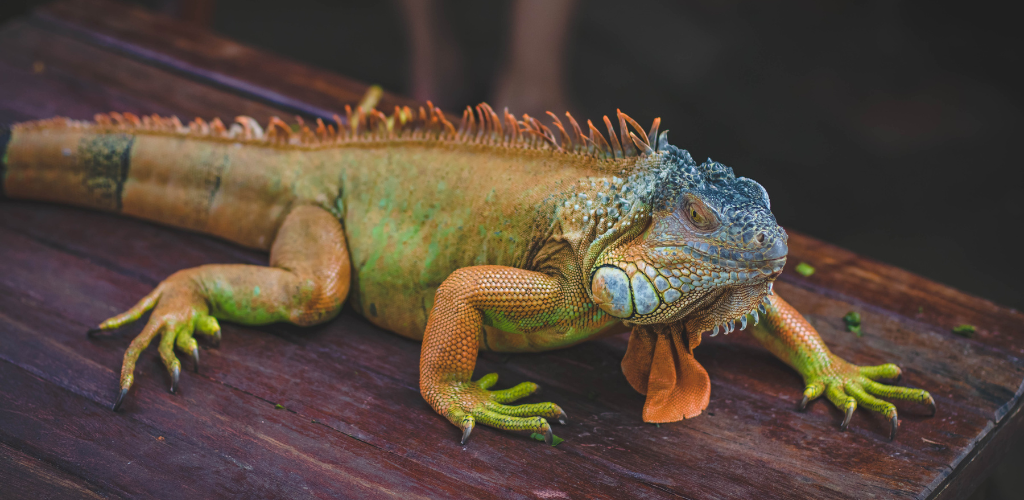
When we observe a creature in deep slumber, whether it is a human in a clinical suite or a lizard perched on a desert branch, we are witnessing a biological process far more ancient than previously imagined. A recent cover story in Nature Neuroscience has unveiled a profound evolutionary secret: a fundamental, extremely slow brain wave known as the infraslow rhythm (ISR) that is shared across the vast expanse of the animal kingdom.
The hidden conductor: what are infraslow rhythms?
In the lexicon of neuroscience, we often focus on rapid oscillations like Alpha or Beta waves. However, infraslow rhythms operate on a much grander temporal scale, with cycles lasting between 50 and 120 seconds. Long dismissed as physiological background noise, these rhythms are now recognized as the master conductors of sleep architecture.
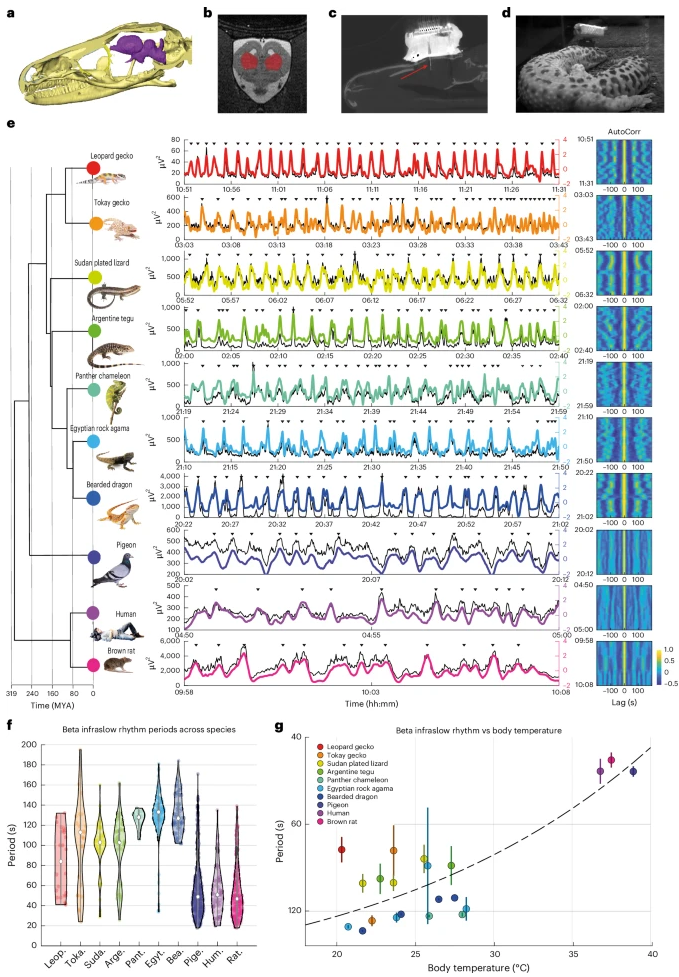
The research demonstrates that these rhythms are not merely neural events but global physiological pulses. By recording brain activity (EEG/LFP), heart rate, respiration, and blood flow across seven species of lizards, as well as pigeons, rats, and humans, scientists identified a universal pattern. This suggests that the core mechanism of sleep is an evolutionarily conserved trait dating back approximately 300 million years to a common amniote ancestor.
Key scientific insights from the study
The findings challenge traditional views on how sleep is categorized and executed across species:
- A Universal Biological Constant: The appearance of identical infraslow patterns in both ectothermic (cold-blooded) reptiles and endothermic (warm-blooded) mammals indicates that this rhythm existed long before these lineages diverged.
- Whole-Body Coordination: The study reveals that the ISR synchronizes the entire organism. It couples neural firing with fluctuations in heart rate, muscle tone, and cerebral blood flow. This suggests that sleep is a holistic bodily coordination process rather than a localized brain state.
- Temperature-Dependent Timing: A fascinating biophysical link was discovered regarding metabolic rates. In lizards, the cycles are slower, often exceeding 100 seconds, while in humans and rodents, they accelerate to approximately 50 seconds. This indicates that the tempo of the rhythm is tethered to the animal’s internal temperature and energy expenditure.
- The “Cleaning” Hypothesis: In mammals, these slow oscillations are associated with the glymphatic system, which is the brain’s waste-clearance mechanism. Finding these same rhythms in reptiles suggests that the essential housekeeping functions of sleep may be an ancient biological necessity.
Technological enablers in comparative neurophysiology
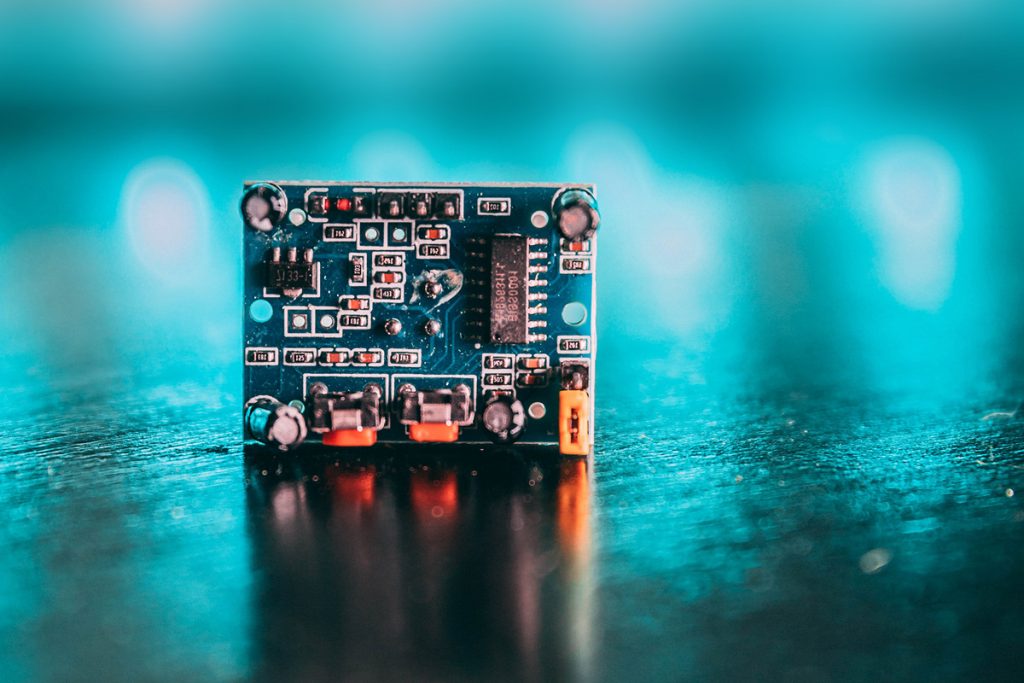
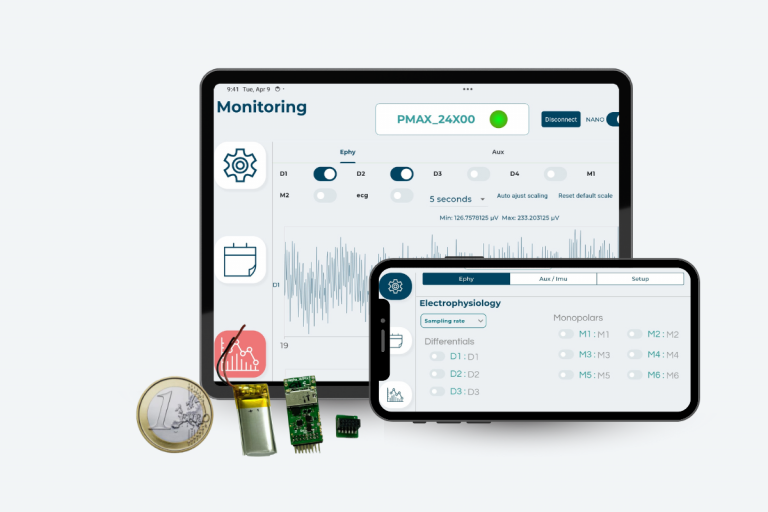
Capturing these subtle, long-period signals across diverse species, particularly small and sensitive reptiles, requires monitoring technology that is both high-precision and non-intrusive. To achieve the data density required for this study, the research team utilized custom-made Phynitty wireless recording system, specially developed by Manitty.
This Phynitty-based wireless system was successfully deployed across multiple species, including lizards and rats, ensuring a unified and high-fidelity data acquisition protocol. As an ultra-miniaturized, wireless neurophysiological platform, Phynitty enables the simultaneous acquisition of EEG, EKG, and 9-axis motion data without the mechanical stress or movement artifacts associated with traditional tethered cables. By facilitating wireless, long-term monitoring in a naturalistic state, Manitty’s solution provided the empirical foundation required to identify the infraslow rhythm as a conserved evolutionary trait.
Conclusion: sleep as a living heritage
This research reminds us that sleep is not a passive “off” switch but a sophisticated, rhythmic orchestration that has been refined over millions of years. The infraslow rhythm serves as a bridge connecting modern human neurology to the ancient history of life on Earth.
By utilizing advanced biologging tools to peer into these deep temporal patterns, we are not only advancing our understanding of sleep disorders and brain health but also gaining a deeper appreciation for the biological threads that bind all sentient life together.